
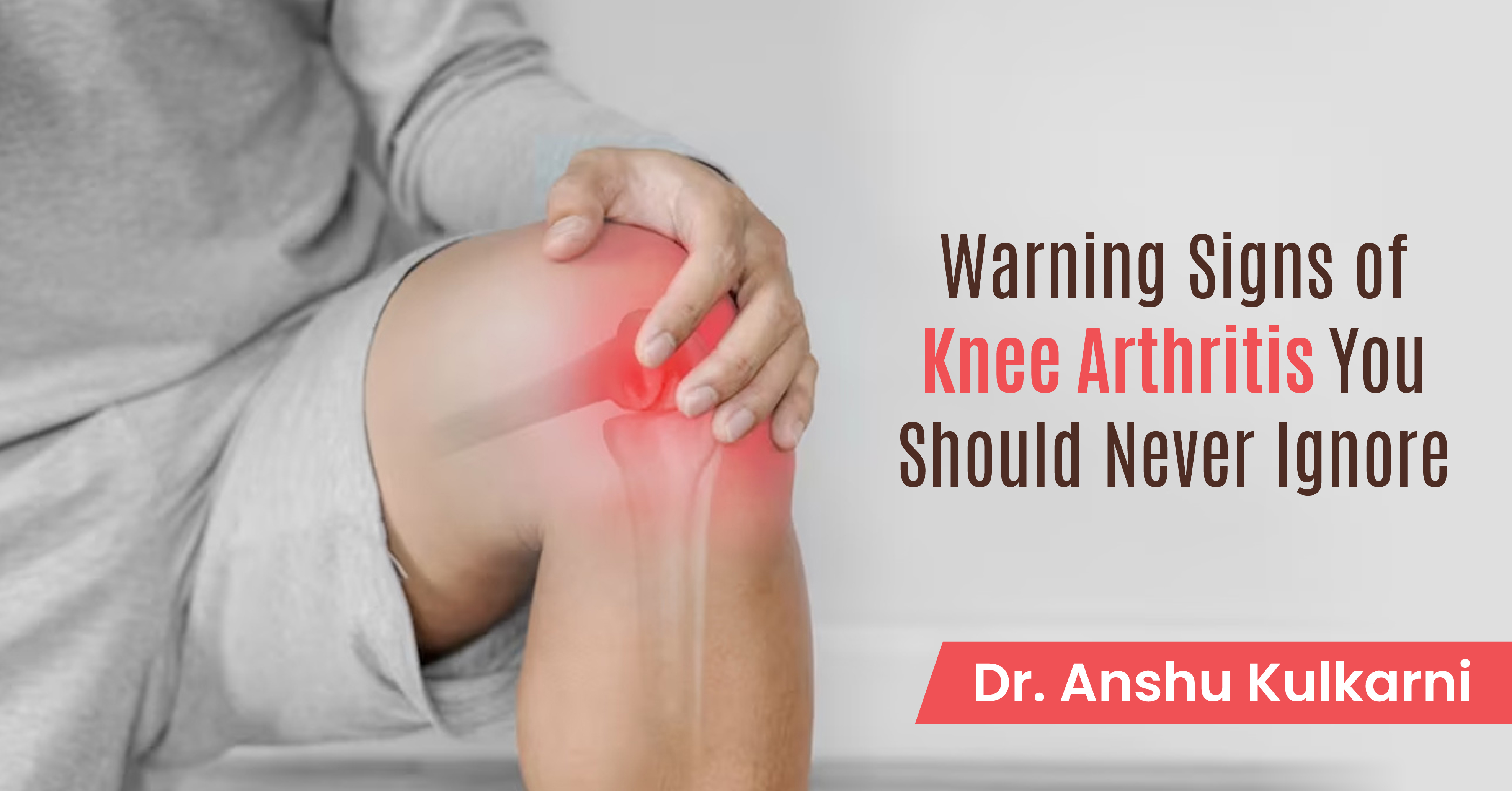
Common Warning Signs of Knee Arthritis
1. Pain While Walking
One of the most common signs of knee arthritis is pain while walking or standing for a long time.
In the beginning, the pain may come and go. Slowly, it can become more frequent and affect daily activities.
2. Knee Stiffness in the Morning
Many people feel stiffness in their knees after waking up in the morning or after sitting for a long time.
The knee may feel tight and difficult to move for a few minutes.
3. Swelling Around the Knee
Swelling is another common symptom of arthritis. The knee may look slightly larger or feel warm when touched.
This usually happens because of inflammation inside the joint.
4. Clicking or Cracking Sounds
Some people hear clicking or grinding sounds while moving their knees.
This sound may happen because the cartilage has become rough and the joint movement is no longer smooth.
5. Difficulty Climbing Stairs
If climbing stairs becomes painful or uncomfortable, it may be a warning sign of arthritis.
The knees carry extra pressure while using stairs, which can increase pain.
6. Reduced Knee Movement
People with arthritis may find it difficult to fully bend or straighten their knees.
Over time, the joint becomes stiff and movement becomes limited.
What Causes Knee Arthritis?
Several factors can increase the risk of arthritis, including:
- Aging
- Excess body weight
- Previous knee injuries
- Sports injuries
- Weak muscles
- Lack of exercise
- Family history of arthritis
Maintaining a healthy lifestyle can help protect your joints and reduce knee pain.
When Should You Visit an Orthopedic Doctor?
You should consult an orthopedic specialist if:
- Knee pain continues for several days
- Swelling happens regularly
- Walking becomes difficult
- Pain affects your daily routine
- Home remedies are not helping
Early diagnosis and treatment can prevent further joint damage.
Book your consultation with Dr. Anshu Kulkarni for proper knee evaluation and treatment.
Treatment Options for Knee Arthritis
Treatment depends on the severity of arthritis and the patient’s condition.
Non-Surgical Treatments
- Physiotherapy
- Weight loss management
- Pain relief medicines
- Knee strengthening exercises
- Lifestyle changes
Advanced Treatments
For severe arthritis, advanced procedures like arthroscopy or knee replacement surgery may be recommended.
An orthopedic doctor can help decide the best treatment based on your condition.
Simple Tips to Keep Your Knees Healthy
You can protect your knees by following simple habits:
- Maintain healthy body weight
- Exercise regularly
- Avoid sitting for long hours
- Wear comfortable footwear
- Avoid extra pressure on the knees
- Eat calcium-rich foods
Regular checkups with an orthopedic specialist can also help keep your joints healthy.
Frequently Asked Questions About Knee Arthritis
Final Thoughts
Warning signs of knee arthritis, such as persistent pain, stiffness, swelling, and difficulty walking, should never be ignored. Early diagnosis and appropriate treatment can help manage symptoms, improve mobility, and support long-term joint health. If you are experiencing ongoing knee discomfort, consult an orthopedic specialist for expert evaluation and care.